closetplace
Why Local Closet Companies Outperform Franchises in Service, Price, and Quality
# Why local expertise matters for NH homeowners.
Why Local Closet Companies Outperform Franchises in Service, Price, and Quality
Why Local Closet Companies Outperform Franchises in Service, Price, and Quality
A factual, structural analysis for New Hampshire homeowners
When homeowners shop for a custom closet, they’re really evaluating three things: service, price, and quality. These three elements — the holy trinity of any home‑service business — determine whether the experience feels personal and satisfying or corporate and transactional.
Franchises aren’t “bad.” They’re simply built for scale, not for the kind of relationship‑driven service that matters in New Hampshire communities. Local companies operate differently, and those structural differences lead to better outcomes for homeowners.
Below is a factual, data‑based comparison of how local independent closet companies outperform franchise dealers in the areas homeowners care about most.
1. Service: Why Local Companies Deliver a Better Experience
1.1 Fewer layers, faster communication
Local companies operate with a simple structure:
Owner → Designer → Installer
Franchises operate with multiple layers:
Corporate → Regional → Local Dealer → Designer → Installer
Every additional layer slows communication, complicates scheduling, and dilutes accountability. Local companies can make decisions immediately — no corporate approval, no ticketing system, no waiting for someone in another state to authorize a solution.
1.2 Personal accountability
When you work with a local company, you’re dealing with people who live here, work here, and will see you again at the grocery store. That creates a level of accountability that corporate structures simply can’t replicate.
If something needs to be fixed, the owner or designer handles it directly. There’s no “let me check with corporate.”
1.3 Consistency of personnel
Local companies tend to have long‑term installers and designers who stay for years. Franchises often experience higher turnover due to quotas, corporate pressure, and the churn of a national system.
Consistency matters — especially in New England homes where walls aren’t always straight, ceilings slope, and every project requires problem‑solving.
1.4 A real example: Meredith Bay
One of the clearest illustrations of local service comes from our work in Meredith Bay.
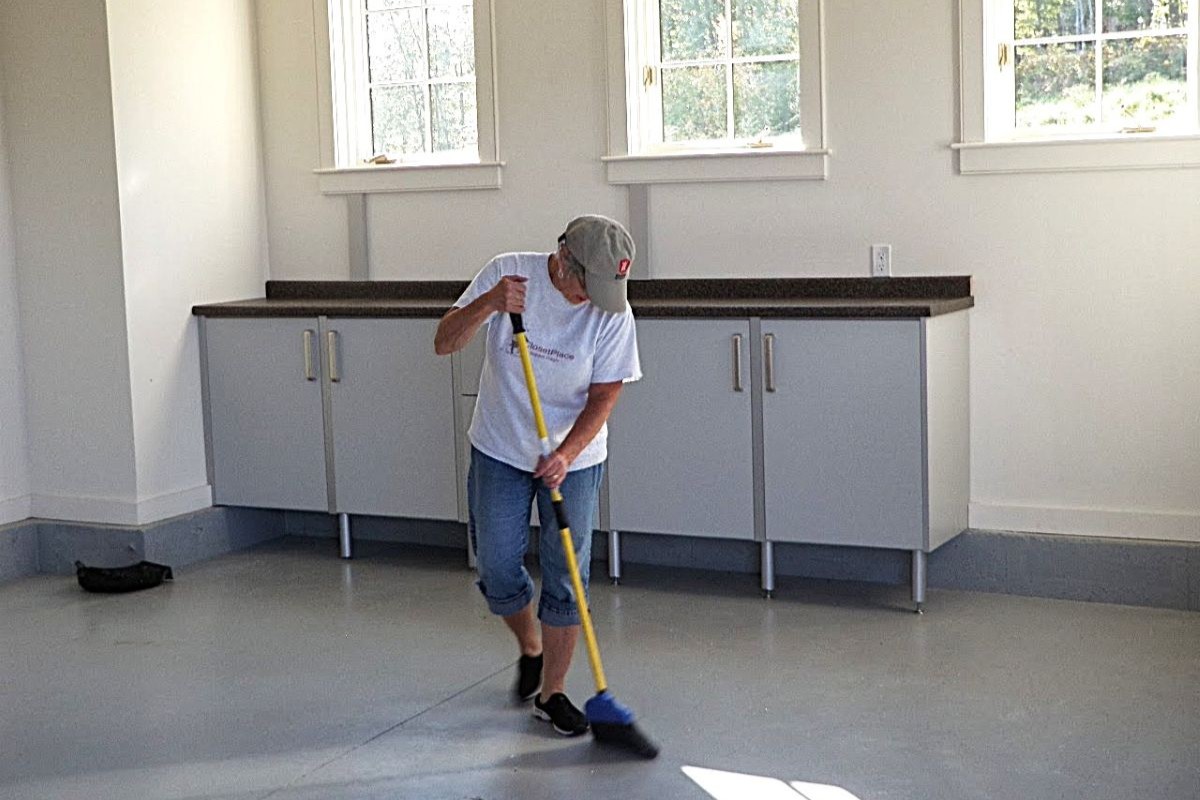
My wife — warm, authentic, and relationship‑driven — handled most of the sales. We installed the garage cabinets in the model home ourselves. After finishing, she swept the garage floor. Not because anyone asked, but because that’s what pride in your work looks like.
That small moment led to something big:
- We earned the trust of the project manager
- We did the closets and garage for the model home
- We met individual homeowners
- We were hired for the townhouses
- We became the go‑to team for the entire development
This is how local businesses grow: through trust, presence, and personal connection. No franchise can replicate that.
2. Price: Why Local Companies Are More Cost‑Effective
2.1 Franchise cost structure
Franchises often claim they’re more cost‑effective due to “bulk buying power.” But the economics tell a different story.
Franchises carry significant overhead:
- Franchise fees (often 5–10% of revenue)
- National marketing fees
- Required software subscriptions
- Required showroom investments
- Corporate overhead
- Multi‑layer management salaries
- Required minimum advertising spend
Even if they buy melamine at a lower cost, their overhead adds 20–30% to the final price before the product reaches the homeowner.
2.2 Local cost structure
Local companies operate lean:
- No franchise fees
- No corporate overhead
- No national marketing fees
- Lower labor turnover
- Local manufacturing reduces shipping costs
- Local sourcing reduces delays
Savings go directly to the homeowner — not to a corporate headquarters in California or New York.
2.3 The myth of “bulk buying power”
Bulk buying power helps with raw material cost, but it does not offset:
- franchise fees
- corporate salaries
- national advertising
- required software
- required showroom investments
Local companies win on price because they don’t have to feed a corporate structure.
3. Quality: Why Local Companies Deliver Better Craftsmanship
3.1 Local manufacturing = tighter quality control
Local companies build for the homes they actually work in. They can:
- adjust on site
- customize beyond corporate templates
- build for sloped ceilings, odd angles, and older walls
- maintain consistent quality because the same team builds and installs
Franchises often rely on standardized materials and corporate‑approved construction methods that limit flexibility.
3.2 Customization without corporate limits
Franchises must follow corporate guidelines.
Local companies can build anything.
This matters in New England, where no two homes are alike.
3.3 Experienced installers
Local installers are often long‑term employees who take pride in their work. Franchises frequently use subcontractors who may not have the same connection to the company or the community.
Quality is a function of craftsmanship and flexibility — not branding.
4. Local Economic Impact: Why Buying Local Matters
4.1 Money stays in New Hampshire
Local companies:
- pay local taxes
- hire local employees
- buy from local hardware stores, lumber yards, and paint stores
- reinvest in the community
Franchises send a portion of every sale to corporate headquarters out of state.
4.2 Local businesses recirculate more money
According to Civic Economics studies, local businesses recirculate 2.5–4x more money into the local economy than national chains.
4.3 Environmental benefits
Local manufacturing reduces:
- shipping
- packaging
- delays
- carbon footprint
This is especially relevant in rural and lake communities.
5. Consumer Preference Data: People Prefer Local
The data is clear:
- 82% of consumers prefer to support local businesses
- 70% believe local companies provide better service
- 68% believe local companies offer higher‑quality products
- 73% say buying local keeps money in the community — and that matters
- 92% trust recommendations from local businesses more than national advertising
These numbers reflect what we see every day:
People want to work with someone they trust — someone who shows up, listens, and solves real problems.
Conclusion: Why Local Wins
Franchises aren’t evil. They’re simply built for scale.
Local companies are built for:
- craftsmanship
- accountability
- relationships
- community
- pride in the work
- solving real problems in real homes
For homeowners who value service, price, and quality, local companies consistently deliver a better experience.
And in communities like Meredith Bay, Brook Hill, and across New Hampshire, that difference isn’t theoretical — it’s lived in relationships, and shared within communities.