closetplace
Hot Closet Design Trends for 2026
# Real Closets for Real People
Hot Closet Trends for 2026
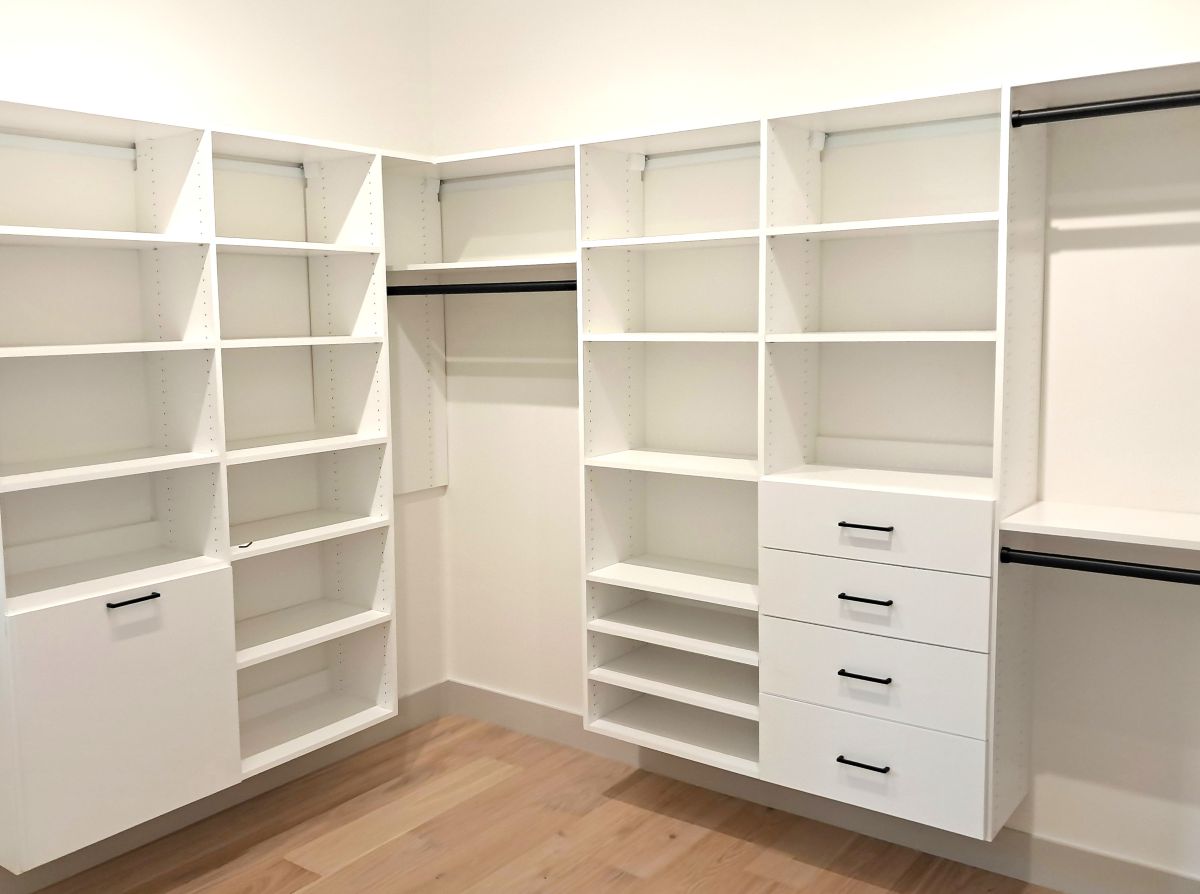
What colors and styles are trending in custom closets in 2026? It may depend on who you ask. Most people consider a custom walk-in closet a luxury, and while this is perception, few builders or architects factor practical closet spaces into their home designs. This leaves most homeowners struggling to turn odd-shaped or inadequately proportioned spaces into closets that function in their real life.
Colors
There are a vast array of colors and textures available for closets today in durable TFL finishes. Wood grains, pastels, perfect matte finishes—anything and everything you can imagine. Yet professional closet designer report 75-90% White remains the default for most modular/32 mm manufacturers because it is:
- Cheapest to produce
- Easiest to stock
- Easiest to match
- Perceived as “clean” and “neutral” by homeowners
Hardware finishes are following a similar trend. With the popularity of the Farmhouse style still in full swing, black closet rods and drawer hardware paired with white is our mos requested combination reported by closet designers.
Closet Styles—the Real Driving Force
Most of us have seen the grand, gorgeous closets that are splashed all over social media sites like Facebook and Pinte
rest. Fancy moldings, spacious island with marble tops, banks of drawers and glittery glass doors and mirrors. In my twenty years as a closet designer, the truth is that most homeowners are fighting for every square inch of storage space in oddly shaped and undersized closets. The real driving force of closet styles is math—fitting the most you can into a finite space. This takes an organized and practical approach that comes down to math and balance.
- Use vertical zoning to assign every inch a job — prime zone for daily items, secondary zone for drawers and shoes, overhead for seasonal storage.
- Prioritize correct hanging geometry — double‑hang where possible, long‑hang only where needed, and never waste corners.
- Place drawers in the ergonomic zone — between knee and chest height for maximum usability.
- Design corners intentionally — avoid rod collisions and blind voids by using L‑shelves or returns.
- Maximize capacity with consistent spacing — predictable vertical rhythm increases usable volume.
- Choose finishes that reduce visual noise — calm, neutral colors make small spaces feel larger.
- Balance hanging, shelving, and drawers — the right mix prevents overcrowding and keeps the closet working long‑term.
- Keep the layout simple and intuitive — efficiency comes from clarity, not complexity
The real driving force of closet style is driven by function, accessibility balance and budget. You don’t need fancy for function, and you don’t need a huge budget to achieve design excellence in a custom closet. A practical approach and sensible choices that put function ahead of style is never out of fashion.