closetplace
Closet Math: Why Wall Space Matters More Than Floor Space
# Closet Math: Smarter Closet Design
Closet Math: Why Wall Space Matters More Than Floor Space
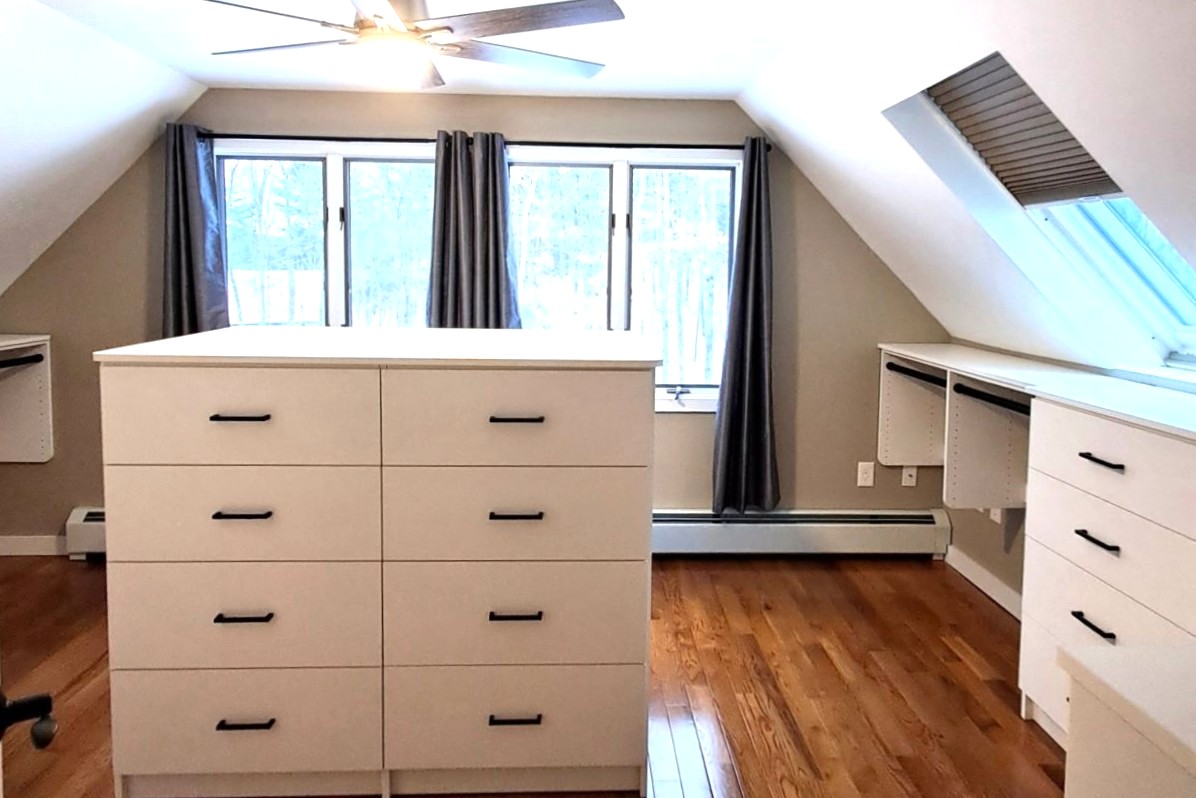
Closet function and efficiency are directly related to available wall space, not floor space—a fact many builders and architects overlook. This becomes especially evident in closets with sloped ceilings, where valuable vertical space is often sacrificed to create more floor area.
While floor space is great for collecting piles of clutter, it does very little to help you organize a closet efficiently. Wall space, on the other hand, creates structure, visibility, and accessibility.
Closet Math in Action: A Simple Comparison
Example 1:
A five‑foot‑wide by five‑foot‑deep closet with no knee wall offers:
- 25 square feet of floor space
- Zero shelf space
Example 2:
Reduce the depth to 2 feet, build a seven‑foot‑high wall, and install five 14‑inch‑deep shelves:
- 10 square feet of floor space
- 29 square feet of shelf space
Which would you choose—29 square feet of shelving with items neatly folded and within arm’s reach, or 25 square feet of floor space that requires crouching or crawling to access?
Why Vertical Space Is the Most Valuable Closet Asset
As a rule, vertical space is the most valuable asset any closet can have. While floor area does affect capacity and movement, without adequate wall height it is difficult—if not impossible—to create a truly efficient closet.
Good closet design balances storage capacity with accessibility. Too much of one without the other leads to clutter, frustration, and wasted space.
Closet Design Is Math, Not Guesswork
Math plays an essential role in designing storage spaces throughout the home, particularly in closets, kitchens, and bedrooms. Hanging space can be measured. Shelf depths can be calculated. Clearances matter. Without minimum dimensions, storage systems quickly become chaotic or unusable.
Here are some planning guidelines that help maximize storage without compromising accessibility.
General Guidelines for Closet Dimensions and Features
- Minimum wall height: 42 inches
- Reach‑in closet minimum: 5 feet wide × 24 inches deep
- Walk‑in closet minimum width for two opposing walls: 72 inches
- Minimum wall space next to a door in a walk‑in: 18–20 inches
- Avoid doors swinging into walk‑in closets unless the space is at least 8 feet wide
- Place light switches outside the closet to avoid blocking components
- In reach‑ins, locate lighting above the door, not on the back wall
- In walk‑ins, place lighting at least 20 inches from the wall
- Standard height of a 32 mm closet system: 84–90 inches
- Standard depth of a 32 mm closet system: 12–19 inches
- Custom solutions are often needed for unique spaces
If you have questions about closet clearances, layout math, or technical specifications, call ClosetPlace anytime—smart design always starts with the right measurements.